For years, “cross-border e-commerce” has been the Wild West of retail. Brands could ship direct-to-consumer (DTC) from factories or distribution centers in Asia, bypassing the complex, expensive hurdles of traditional importing.
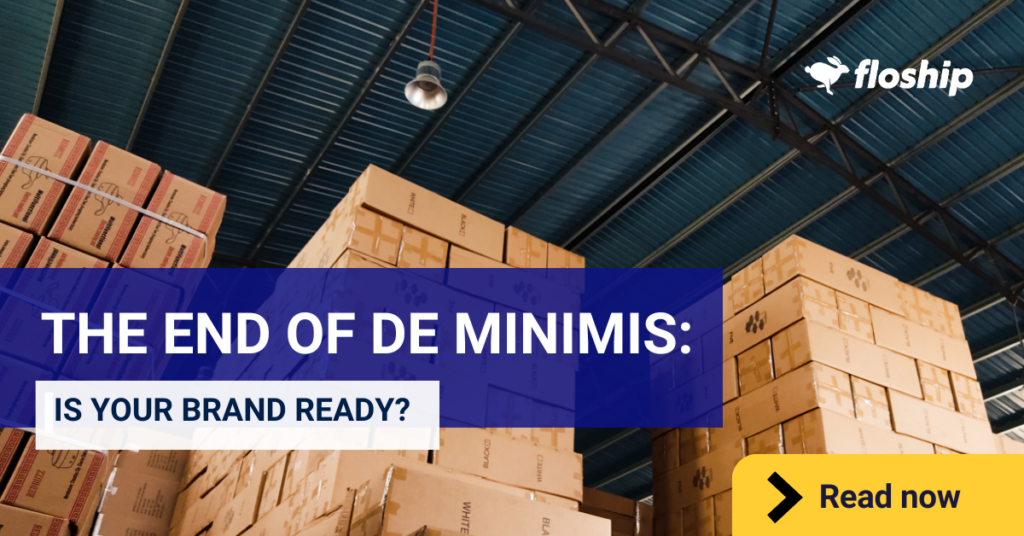
But there’s a quiet crisis brewing. Many brands don’t actually have a “sustainable global strategy.” What they have is a de minimis dependency.
What is the “De Minimis” Dependency?
The de minimis threshold is the value below which goods can be imported into a country without paying duties or taxes. You can spot a brand trapped in this dependency by three symptoms:
- Fragmented Shipping: Orders are intentionally split or kept small to stay under the radar.
- Threshold Obsession: Pricing and packaging decisions are dictated by tax limits, not customer experience.
- Compliance Apathy: Discussions about HS codes, VAT, or landed costs are met with, “It doesn’t matter; we’re under the limit.”
The Regulators Have Woken Up
The “honeymoon phase” of unregulated small-parcel shipping is ending. Regulators in major markets have realized they are losing billions in revenue and leaving domestic businesses at a disadvantage.
- In the EU: The proposed “Value Added Tax (VAT) in the Digital Age” (ViDA) and customs reforms aim to scrap the €150 duty-free limit entirely.
- In the US:The $800 de minimis rule has been fundamentally neutralized by new executive and legislative actions. Effective August 29, 2025, the U.S. government suspended the duty-free treatment of de minimis shipments. In February 2026, this suspension was formalized under new legal authorities (Section 122 and Section 301).
The message is clear: As global trade authorities close historical gaps in de minimis thresholds, businesses must pivot from relying on exemptions toward building structurally sustainable margins
From Arbitrage to Authority: How to Pivot
The brands that survive the next three years won’t be the ones that found a new loophole. They will be the ones that treated regulation as a feature, not a bug. Here is how the “Winners” are shifting their strategy:
1. Stress-Test Your Unit Economics
Don’t wait for the law to change. Calculate your margins today as if every single parcel was subject to full duties and a flat handling fee. If your business turns “red” the moment a 10% duty is applied, you don’t have a logistics problem—you have a business model problem.
2. Regionalize Your Risk
Shipping “parcel-by-parcel” from the origin is the most fragile way to scale. Leading brands are moving toward regional hubs. By importing in bulk into an EU or US-based 3PL (Third Party Logistics), you pay duties upfront, but you gain:
- Faster shipping times (2 days vs. 10 days).
- Lower per-unit shipping costs.
- Certainty in pricing.
3. Master the “Landed Cost”
“Landed cost” is the total price of a product once it has arrived at a buyer’s door, including shipping, duties, taxes, and fees.
To maintain transparency and protect your brand reputation, prioritize investments in HS Classification and landed cost features. Providing customers with upfront duty clarity significantly reduces the risk of parcel abandonment and the resulting impact on your bottom line.
The Warning Signal
Regulation catching up to e-commerce isn’t a “glitch” in the matrix. It’s the system working exactly as intended. Markets eventually level the playing field.
If turning off a single tax exemption would break your company overnight, consider this your early warning. It’s time to stop playing the arbitrage game and start building a real infrastructure.
Are you building a brand, or are you just managing a loophole?
At Floship, we help high-growth brands evolve from fragile shipping models to robust, circular supply chains. From navigating complex HS classifications to strategically positioning inventory in regional hubs, we protect your margins with a strategy built to outlast shifting tax exemptions. Our expert advisory on import/export compliance and new market expansion ensures your global growth is both seamless and sustainable.
We’re here to help you build a strategy that lasts longer than a tax exemption.
Let’s talk about your global roadmap.

Ready To Upgrade Your Logistic Solution?
Speak to Floship ecommerce logistic consultant about improving your global support chain today